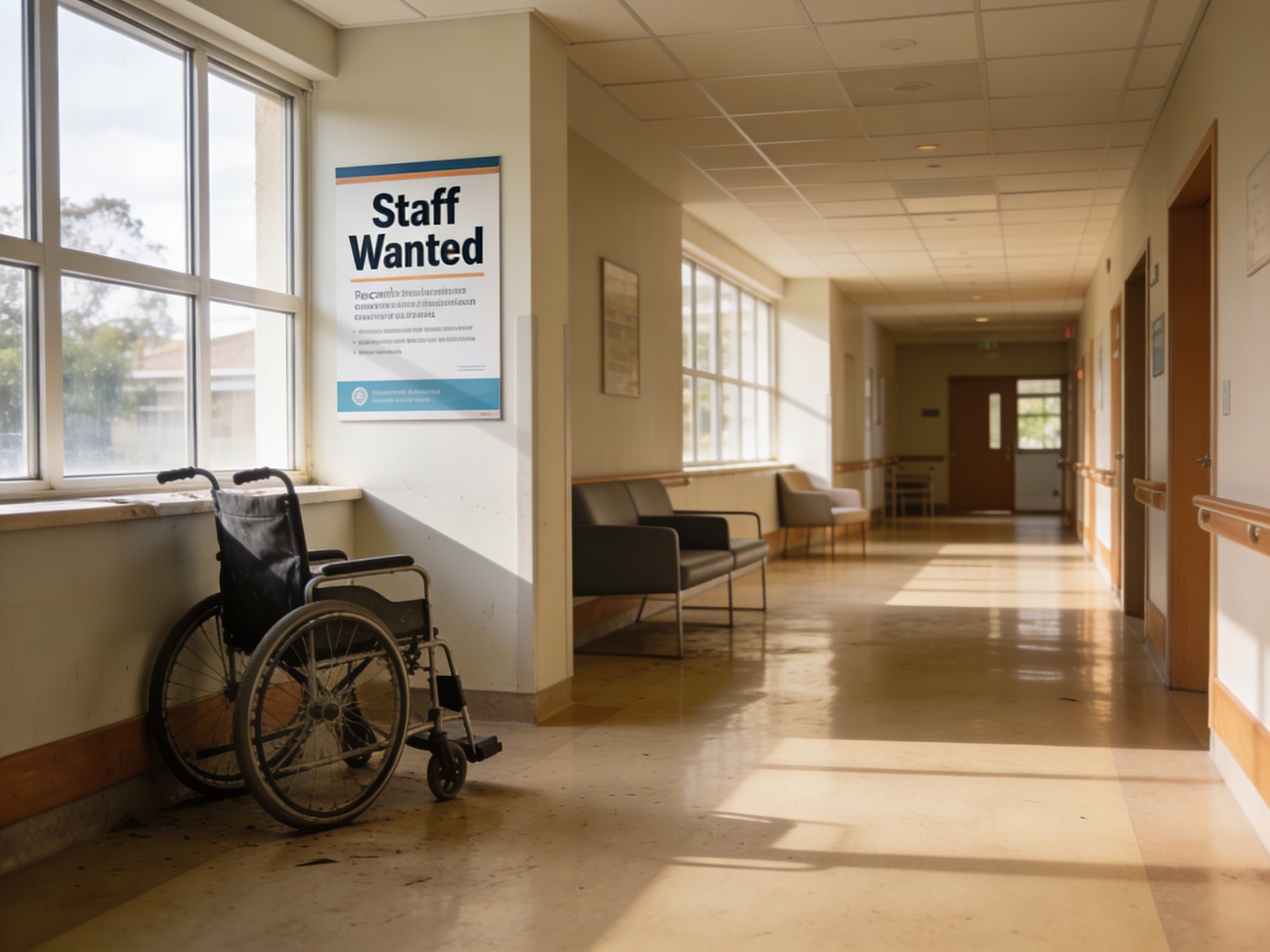
What Happens When 110,000 Missing Workers Meets 2.3 Million Aging Australians?
Australia's aged care sector is facing a workforce crisis that threatens the foundation of how we care for elderly people. By 2030, just four years away the sector will face a shortage of at least 110,000 direct care workers unless urgent action is taken. That shortfall balloons to more than 400,000 workers by 2050. To meet even basic standards of care, Australia needs at least 17,000 additional direct aged care workers each year for the next decade. These aren't abstract numbers, they represent personal care assistants, nurses, and allied health staff whose presence or absence determines whether elderly Australians receive dignity-preserving care or are left understaffed, under-supported, and unsafe.
The Australian Nursing and Midwifery Federation's February 2026 priorities highlight that reforms have been implemented mandated minimum care minutes, 24/7 registered nurse coverage, the new Aged Care Act, yet the real-world impact on workloads, staff support, and care quality remains unclear. ANMF members consistently report that safe workloads and the ability to deliver their best care are what matter most. Empty beds exist in care facilities despite long waiting lists, a glaring sign that workforce capacity, not demand, is the binding constraint. As CEDA Chief Economist Jarrod Ball stated: "We will need at least 17,000 more direct aged-care workers each year in the next decade just to meet basic standards of care. We have failed to prepare for this challenge, despite multiple inquiries and our demographic destiny being well understood for decades".
This isn't a problem traditional recruitment can solve. Australia's aged care workforce crisis reflects deeper structural issues, undervaluation of care work, demanding conditions, inadequate compensation, and a professionalized, institutionalized model that makes care work exhausting rather than meaningful. If we want genuinely different outcomes, we need genuinely different approaches, ones that recognize care as community responsibility, not just employment category.
Why Throwing More Money at Traditional Models Won't Work
The federal government has made commitments: raising minimum daily staff time per resident to 200 minutes, wage increases following the Aged Care Work Value Case, and increased funding. These improvements matter 200 minutes is significantly better than previous standards. But as healthcare researcher Jane Winzar notes, this "will only get us to the bare minimum of acceptable care by global standards. That is how far behind we are compared with other countries". The improvements address symptoms without changing underlying conditions that make aged care work unsustainable for so many.
Current workforce projections are based on conservative assumptions the situation may prove even more dire. By 2031, nearly 20 percent of Australia's population will be aged over 65, up from around 16 percent now, so demand will only accelerate. The number of Australians aged 70 or over is expected to reach 2.3 million by 2044. Meanwhile, aged care workers already report considerable pressure; if change doesn't occur now, shortages will worsen even as demand grows.
Traditional recruitment focuses on filling positions within existing structures. But those structures shift work, institutional settings, high workload ratios, emotionally demanding conditions are precisely what drives workers away. Recruitment can't solve retention when the job itself is unsustainable. The sector has struggled with turnover, burnout, and chronic understaffing not because Australians don't care about elderly people, but because we've organized care work in ways that are punishing even for dedicated professionals.
The ANMF's October 2025 national survey of aged care workers examined staffing levels, skill mix, funding, consumer safety, worker safety, and clinical safety. Results will guide advocacy and potentially a national campaign throughout 2026. This grassroots data collection recognizes what policy often overlooks: workers know what makes care sustainable or impossible. Safe workloads aren't just about worker wellbeing, they're fundamental to care quality. An exhausted, overwhelmed workforce cannot deliver person-centered, dignified care no matter how sophisticated the regulatory framework.
Australia also lags in building residential aged care capacity, needing 10,000 new beds annually for two decades but adding only around 800 last year. This capacity crisis intensifies workforce pressure: when facilities are understaffed, existing workers carry impossible loads, accelerating burnout and departure. The system requires transformation, not incremental expansion.
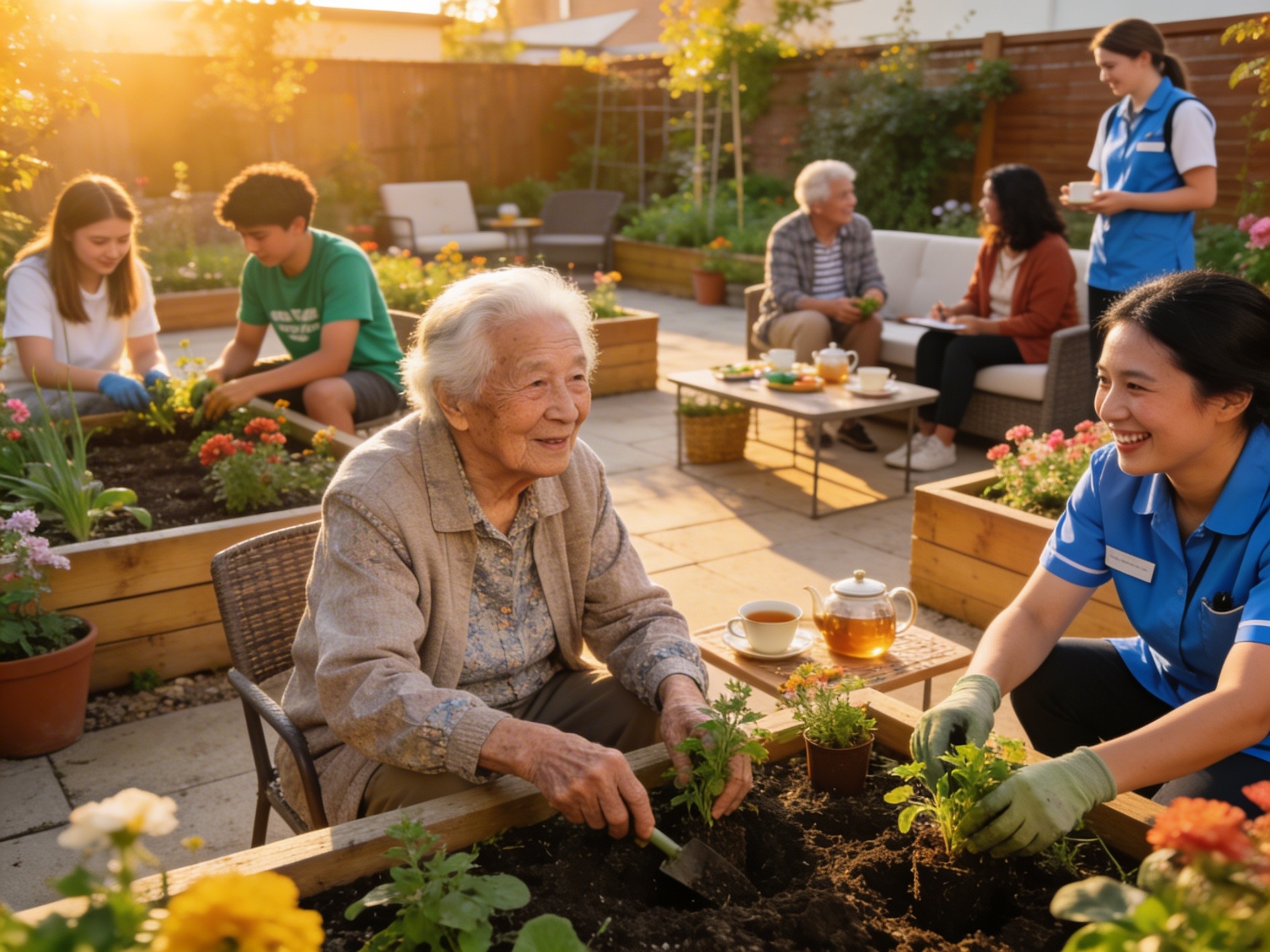
Sharing Responsibility Beyond Employment
If professionalized, institutionalized aged care is structurally incapable of meeting Australia's needs, what alternatives exist? Community-based models that distribute care responsibility beyond employment relationships offer compelling possibilities. These approaches don't eliminate professional care workers, they're essential, but they embed professional care within broader community reciprocity rather than isolating it as specialized labor.
Intergenerational programs demonstrate one pathway. When early learning centers co-locate with aged care facilities, regular activities between children and elderly residents create relationships that benefit both. Older adults experience improved mental and physical health, feeling valued and less isolated. Children develop empathy, social skills, and communication abilities. These programs strengthen communities by breaking down age barriers and establishing relationships that diminish the impact of declining health for elderly people while supporting children's emotional intelligence development. This isn't professional care, it's community care that reduces the isolation and loss of purpose that professional services struggle to address.
Age-friendly cities across Australia are redesigning environments to support older people participating actively rather than receiving services passively. Ballarat's Ageing Well Strategy, Fremantle's Age-Friendly commitments, and Age Friendly Illawarra's alliance all emphasize creating opportunities for older people to lead active, engaged lives and contribute positively to communities. This philosophical shift from service recipient to community contributor changes what "care" means. When elderly people are valued participants rather than clients, care becomes something communities do together, not something professionals deliver to passive recipients.
Local councils are navigating this transition. Frankston City Council is moving to a shared delivery model for Community Care services, balancing client and staff wellbeing with financial sustainability while supporting a stronger local care network. This shared responsibility approach acknowledges that council services alone can't meet community needs, broader networks of formal and informal support are necessary. Similarly, Northern Grampians Shire is reviewing Community Care Services in response to the new Aged Care Act, which introduced a rights-based approach emphasizing older people's independence, autonomy, and choice while changing funding models to require means-tested contributions.
These changes create uncertainty but also opportunity. When traditional service models become unviable, communities must innovate. The question is whether innovation reinforces professionalized, transactional care or embraces relational, community-embedded approaches. CareNeighbour's philosophy, reciprocal, trustworthy, human care where today's caregiver is tomorrow's cared-for, aligns with these emerging models. Care as mutual aid rather than commodity exchange distributes responsibility more broadly and sustainably.
Reciprocity research shows that in elderly relationships, life-course reciprocity helps maintain continuity, particularly with spouses and children where former support is reciprocated in older age. This lifespan perspective, care as something we all give and receive across time, contrasts sharply with professionalized models where care workers provide and elderly people receive. Community models that embrace reciprocity can engage elderly people as contributors even while they need support, preserving dignity and purpose in ways employment-based care rarely achieves.
Technology can support community care without replacing it. AI-powered scheduling, predictive health monitoring, and communication platforms can coordinate distributed care networks more effectively than institutional models. But technology works differently when embedded in community relationships versus institutional transactions. A neighbor alerted by a fall detection system responds with relational knowledge an on-call service can't replicate.